This year in early internet GIFs: From dragons to drag queens, retro pixels we resurfaced in 2025
In the past year, I've published 166,351 words on ESC KEY .CO ... alongside a whole bunch of GIFs mined from '90s and early '00s websites. Some of you are just here for the GIFs. That's OK. So, here are a few of our favorites and what stories they appeared in.



How early internet GIFs became part of the visual language of ESC KEY .CO
Last year, I sent an extra enthusiastic, very earnest voice note to my celestial twin (i.e., we have the same sun, moon and rising signs) with news of a nerdy career highlight: “The Internet Archive blog just interviewed me! They are writing about my portfolio website! Eeek!”
She replied: “I have absolutely no idea what that means! But I’m excited for you!”
And to be fair, there is absolutely no shade intended for the Internet Archive when I underscore that I have done more important things in my career than being featured on their blog.
But I also shall underscore that for retro internet design aficionados, the Internet Archive is pretty much the coolest place online: the archive’s expansive collections and special projects such as the Wayback Machine and GifCities are the only portals to the old webs we’re slowly losing, bit by literal bit. And when you spend an embarrassing amount of time DIY-ing a website and filling it with GIFs harvested one at a time from archived GeoCities websites, well, the Internet Archive blog is the coolest place to be.
And, sure, I did wax a little poetic:
“The Internet Archive just touches my digital life in so many different ways,” Shadel said. “As a journalist, it’s a fact-checking tool. Having the ephemeral internet preserved for future researchers, writers, reporters and editors is a huge service to democracy. And it’s also just fun.”
Indeed, many people spent their pandemic lockdowns learning to do viral TikTok dances or recording a whole album. Meanwhile, I spent mine … browsing a ton of old websites and collecting GIFs.
And if you were to cast your eyes over the truly overwhelming collection of GIFs cluttering my laptop’s hard drive, you might get the impression that I’ve made GIFs my entire personality. You wouldn’t be entirely wrong.


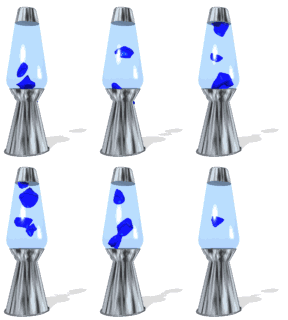
A few GIFs the author has archived in their personal collection, which spans dozens of categories and hundreds of GIFs largely gathered via GifCities since 2020-era lockdowns.
It was an instant “hell yes!” when Chris Freeland, the Internet Archive’s director of library services asked if I wanted to write an essay about the importance of GIF preservation for a huge special project they were launching later in 2024. And so I wrote about GIFs in the landmark “Vanishing Culture: A Report on Our Fragile Cultural Record.”
I republished that essay on ESC KEY .CO one year ago on December 20, 2025, weeks before I officially launched this new media outlet to the public or sent a single newsletter. (At this point, I was the only subscriber.)
Since then, I have published 166,351 words on the site … which is more than a fifth of “War and Peace.” This includes sometimes brief and sometimes not-so-brief briefings; original reporting about, say, internet strangers following content creators on group trips around the world; and profiles with some of the most interesting people on the internet (with a few more coming very soon). Almost 4,000 of those words were written by hand for a long-form essay I wrote about the future of handwriting. And this total does not count the 666 times I typed out the word “don’t” in a satirical listicle of 666 ways professional writers can use “AI.”
Also not included in that total are the 12,000 words we republished by 19th-century writer — and Karl Marx’s son-in-law — Paul Lafargue. “The Right to Be Lazy” was the first selection in our Public Domain Reading Club ... a pamphlet I should clearly reread.
One thing I’ve not counted is how many GIFs we’ve published — all drawn from my personal collection, each mined from GifCities, the Internet Archive’s GIF search engine. But we’ve published a lot, as I wrote in a briefing in June:
Yes, I redesigned my website, inspired by the 1996 Space Jam site and filled it with some of my favorite cyberspace-themed GIFs including a bubble-gum blowing Furby. And when I launched ESC KEY .CO, I integrated GIFs into long-form articles as both art and section dividers, riffing on the structural utility they played in early internet websites. My personal GIF collection has only continued to grow.
Reflecting on one year of ESC KEY .CO, I asked myself a question, how would the only lifestyle newsletter on the internet approach an end-of-year recap? For example, I could highlight our best articles — but I kind of did that already with a “best of ESC KEY .CO” screenplay I wrote while under the influence of a few too many medications; I was very ill in October. Or I could round-up all the ways in which we were correct about things before other people. Or I could write yet another very long essay about the state of journalism!
But then it hit me like the Eleventh Commandment: Thou shalt publish a “This year in early internet GIFs” round-up every anniversary henceforth.
Because as one reader wrote in a testimonial, they're really half the reason we're all here (me included):
[Subscribe for] serious responsible tech journalism sans hype sprinkled with MoMA-worthy GIFs that will get your little mouse brain to read immediately rather than save for later.
Or as Oliver Haimson put it after we ran a couple articles on their excellent book, "Trans Technologies":
ESC KEY .CO by JD Shadel is my favorite new email newsletter and media outlet, with a delightful early-internet aesthetic (the GIF game is strong!).
Look, if we can deliver a strong GIF game, then I'm fulfilling my life purpose.
Well, this one is for you, Luis, Oliver and the rest of you here for the GIFs!
I am pleased to present our latest report: the best GIFs we’ve published this year, based on a complex methodology (i.e., these are a few GIFs I really liked).
This relates to my most reliable prediction for 2026: More GIFs to come on this website, baby.
A selection of vintage GIFs we resurfaced in our first year
1. If you ask me who I aspire to be, the answer is this person splashing in a pool:

This GIF appears here:
 JD Shadel
2. We're establishing ESC KEY .CO as a vital source for service journalism by surfacing info such as this pill for a broken heart and facts like, broken hearts continue to beat:


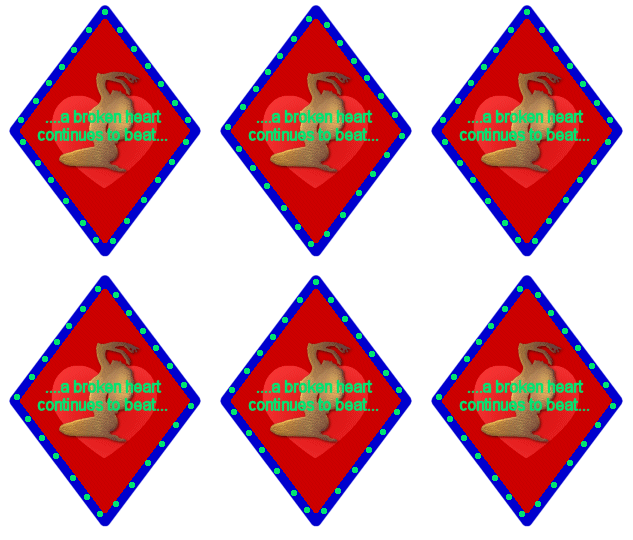

These GIFs appear here:
 JD Shadel
3. Bullshit makes you burn with anger! Burn a playlist onto a CD for a pal! Burn some cash and upgrade to become a paid subscriber! Wow!



These GIFs appear here:
 JD Shadel
4. Wow! GIFs of dragons!




5. And... GIFs of drag queens! Wow!



Early internet drag queen GIFs. Some queens even had fan sites dedicated to them on GeoCities back in the day.
These GIFs appear here:
 JD Shadel
6. Write with a pen! Highlight what you wrote after!


These GIFs appear here:
 JD Shadel
7. Girl with red hair dances! Red lipstick! Red dress dancer! Red (JD's Version)!



These GIFs appear here:
 JD Shadel
 JD Shadel
8. This GIF shows how your computer actually works:
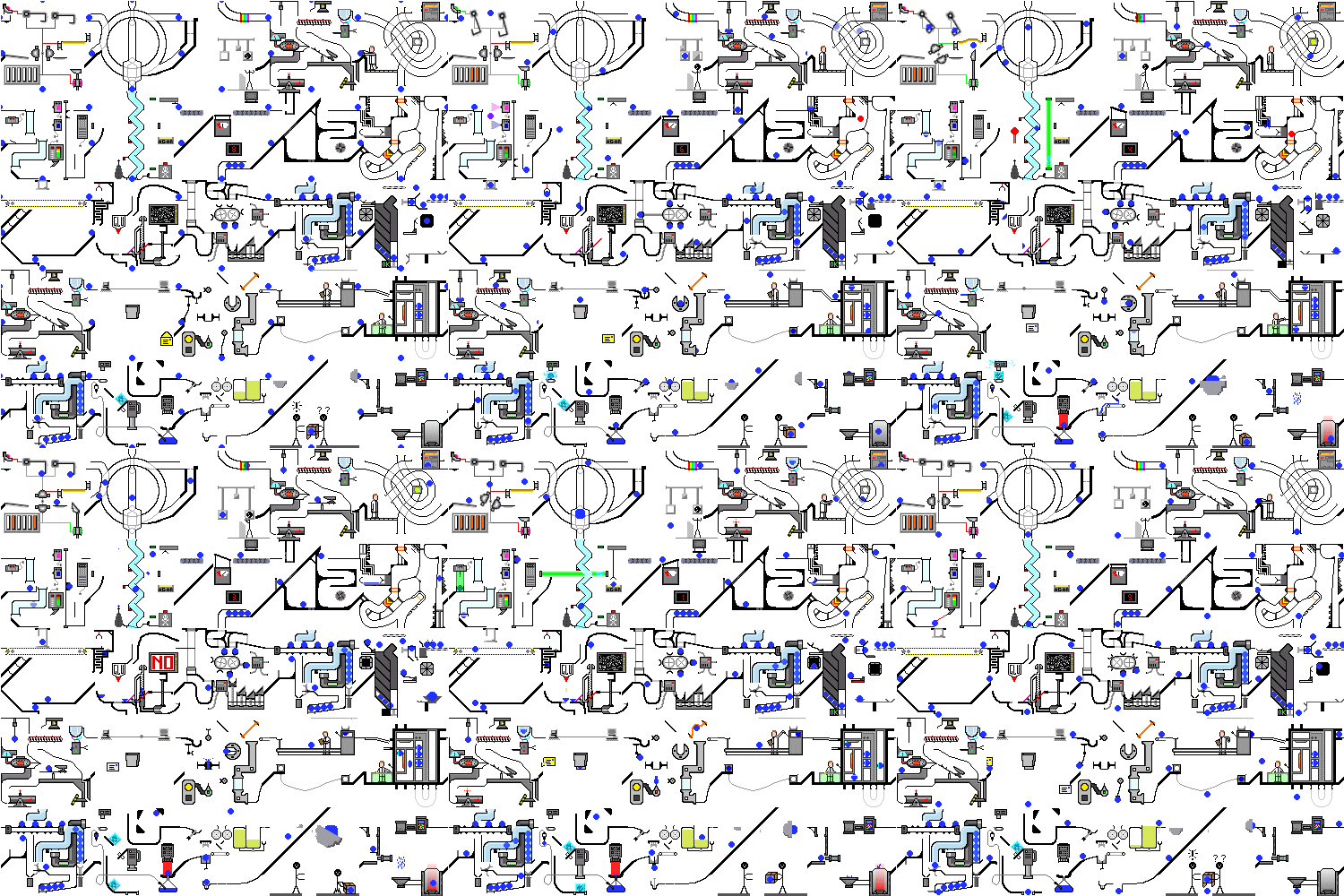
This GIF appears here:
 JD Shadel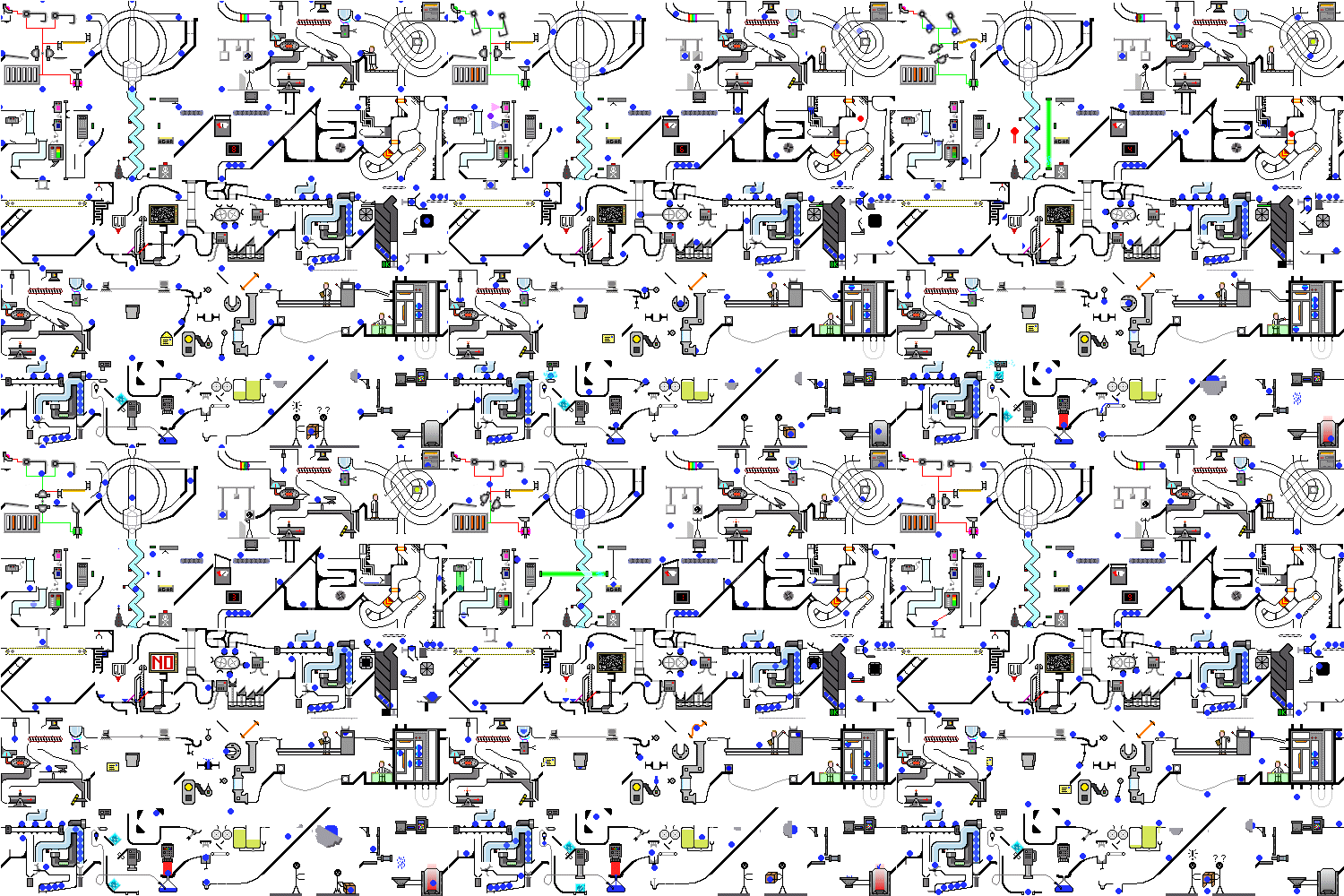
9. These Windows UI GIFs, one that erases homophobia! Another promoting online gambling! One more about, well, gross ...
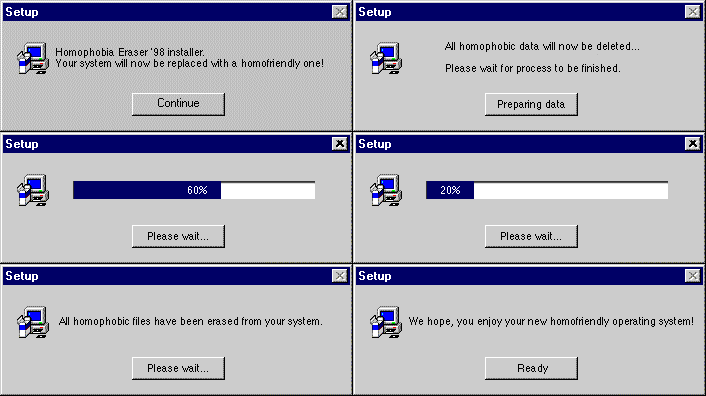
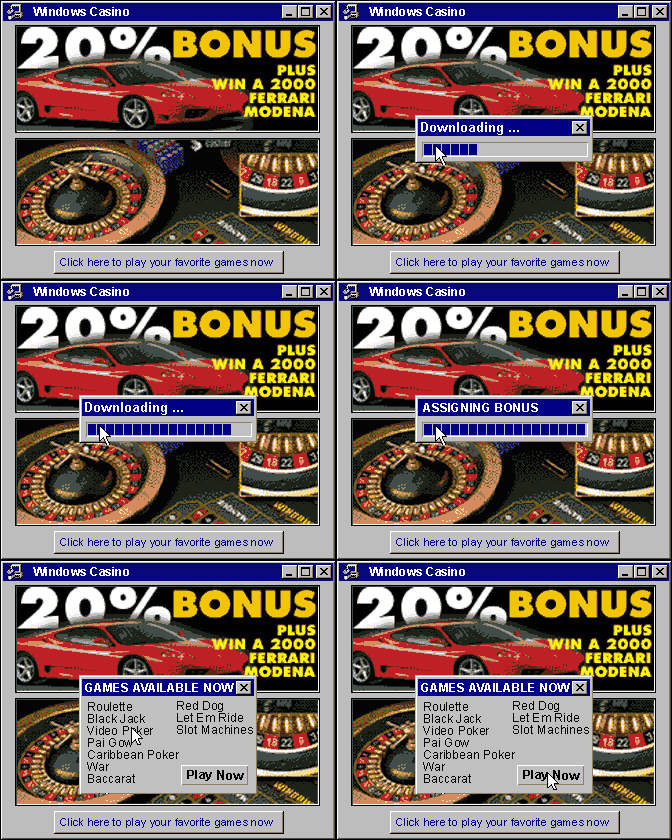
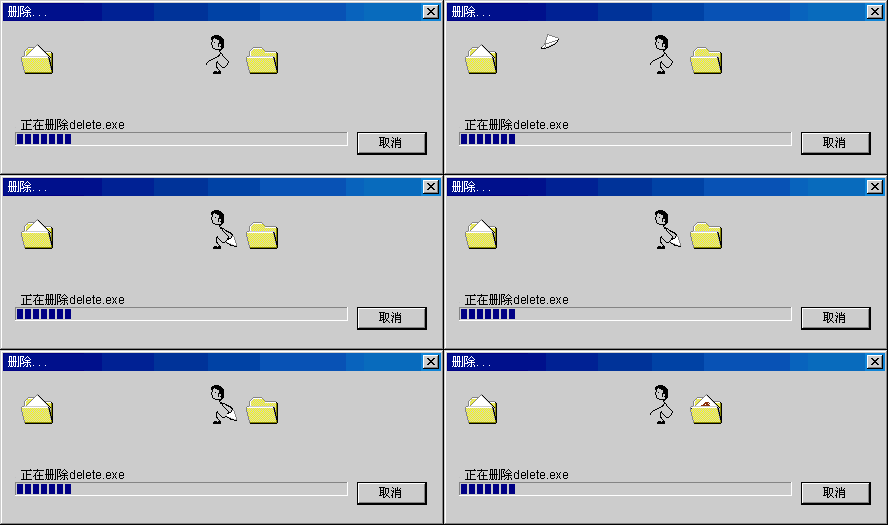
These GIFs appear here:
 JD Shadel
 JD Shadel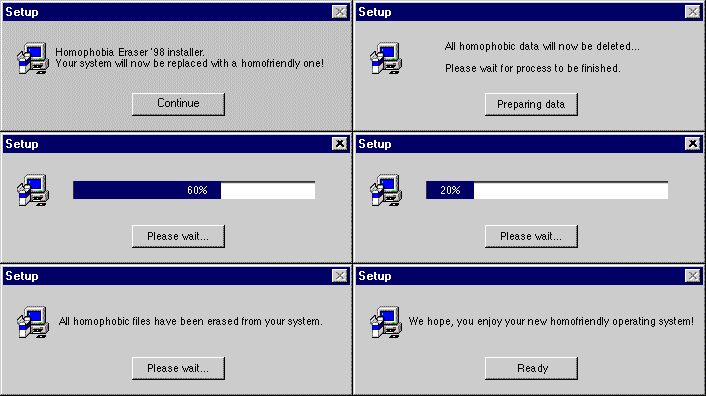
 JD Shadel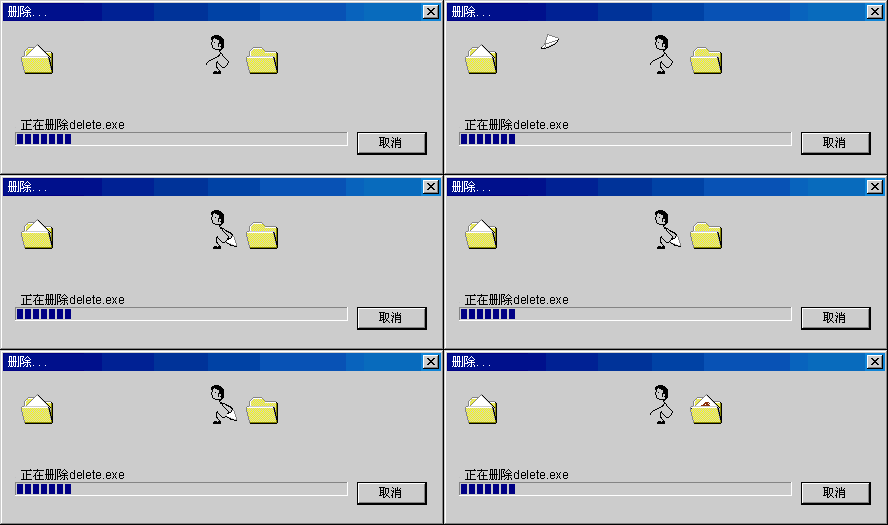
10. Bartender, I will have another one of these ... to make it to the end of this year:

This GIF appears here:
 JD Shadel
11. Save the GIF pandas!





These GIFs appear here:
 JD Shadel
12. Let's gamble, girls!

This GIF appears here:
 JD Shadel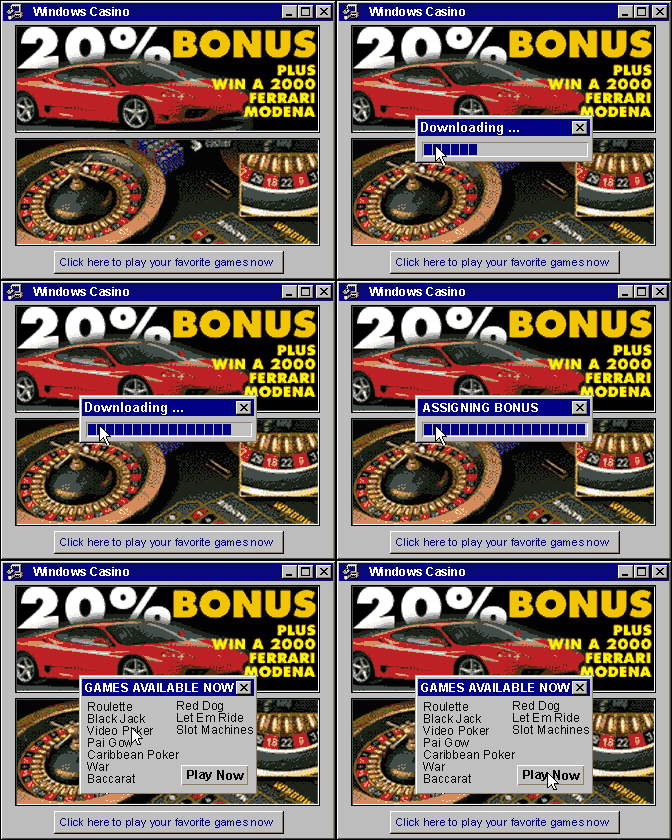
13. Some early internet GIFs are incredibly earnest and dull ... like this very tall GIF of an elevator, which is ... accurate? Yeah!

This GIF appears here:
 JD Shadel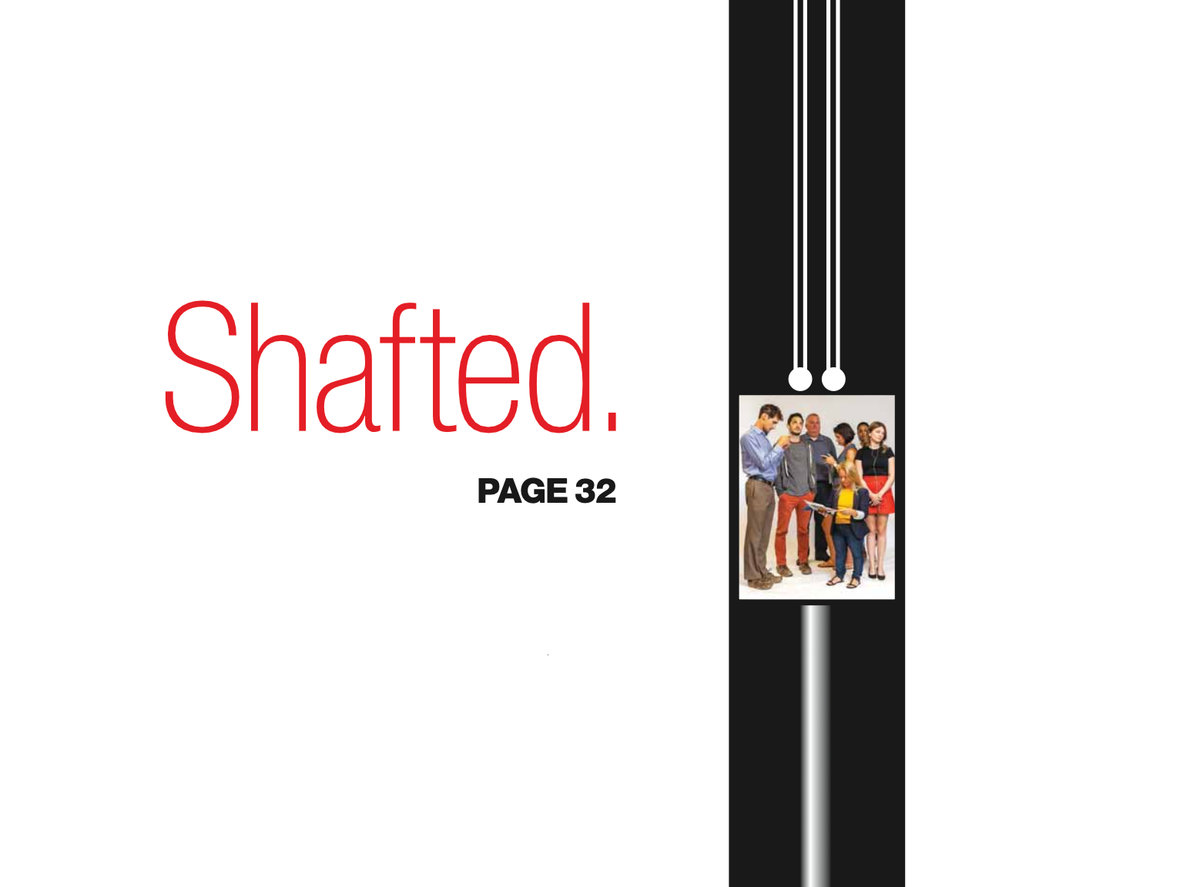
14. Fetch in space! Golf in space! Jump in space!



These GIFs appear here:
 JD Shadel
15. World Wide Weird!


These GIFs appear here:
 JD Shadel
 JD Shadel
16. What is an e-mail salad?! This is an e-mail salad!



17. A suspenseful drama involving fork and spoon:
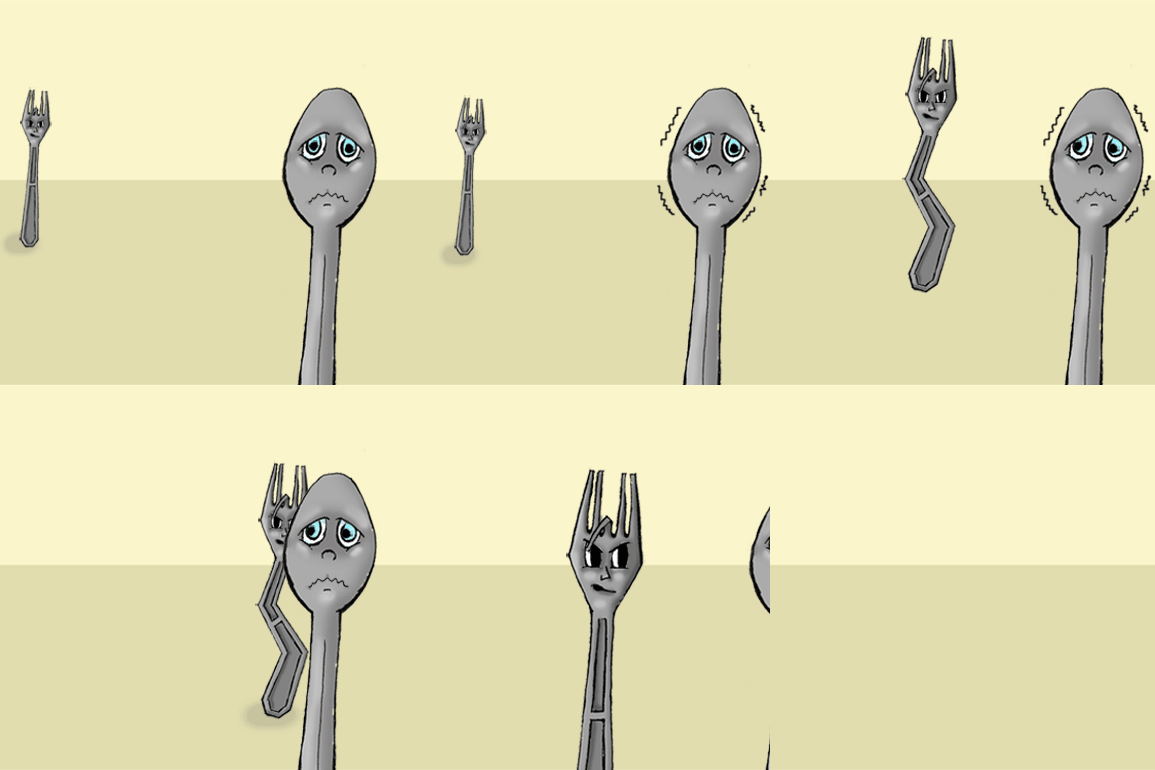
These GIFs appear here:
 JD Shadel
18. Heating up on the web 1.0:





These GIFs appear here:
 JD Shadel
19. Like anything good, ESC KEY .CO remains a work in progress... and is therefore forever under construction:




So many early internet construction workers GIFs remain out of work to this day.
These GIFs appear here:
 JD Shadel
 JD Shadel
20. Last night a DJ ... wasn't as good as these GIFs:



21. Shake Yo Ass!


\
These GIFs appear here:
 JD Shadel
22. Butterflies!



These GIFs appear here:
 JD Shadel
23. Passport to fun!




These GIFs appear here:
 JD Shadel
24. Burn All .GIFs! Let me explain ...

This GIF appears here:
 JD Shadel
Why so many GIFs? As I wrote in June about the history of Burn All GIFs Day:
On November 5, 1999, a small group of activists gathered outside the headquarters of a tech company in California to stage what The Atlantic called “the first time in human history that anyone has ever thought it worthwhile to stage an organized political protest, even a small one, over a mathematical algorithm.” They targeted Unisys, the company that held the patent for the LZW compression algorithm used in GIFs.
Yes, it was on its face an obscure demonstration. Burn All GIFs Day was about patent and royalty controversies around the algorithm that made GIFs possible. The activists couldn’t literally burn digital files due to state law about setting fires in public places, so they instead used red markers to ceremonially cross out GIF images on floppy disks instead. What seemed like a quirky tech protest about intellectual property law was actually a canary in the digital coal mine.
Twenty-six years later, we're facing far more consequential battles over digital control. Tech oligarchs are shoving generative “AI” products everywhere, trained on the intellectual property of countless creative workers on the way in and destabilizing the market for our work on the way out. Meanwhile, platforms are disrupted overnight when a rogue billionaire decides to take on a new pet project — buying a social network to amplify his own personal grudges.
The enshittification of the web feels relentless, almost inevitable.
But here's the thing: we are still netizens. When I see early internet GIFs, I am amused, yes. I’m pleased semantic search now makes it easier to find drag queen GIFs from websites past. It’s also a reminder that we collectively have more power to shape the development of these technologies than the Big Tech platforms want us to think.
The web is still what we make it — even when it doesn't feel that way.
...2025. Buh-bye: